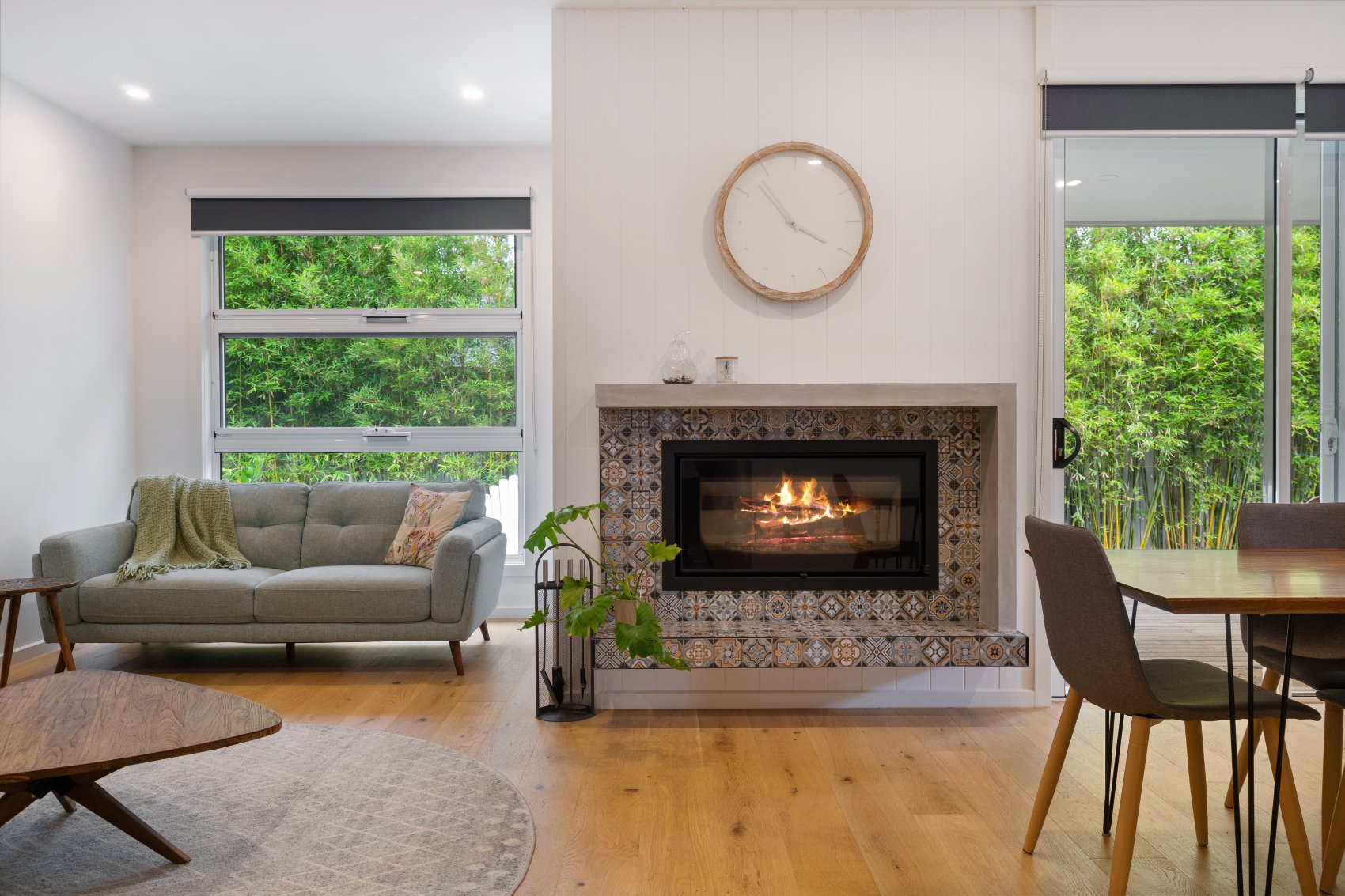
When a couple approaches us to build the home they'll spend the rest of their lives in, the brief almost always includes the same word: comfort. Not luxury — comfort. Consistent temperatures year-round. Low energy bills. A home that feels good to be in without fighting it.
That's exactly the thinking behind a recent Crowncon Homes project: a custom home designed specifically for two people stepping into retirement, built to maximise their block's width and anchor their lifestyle for decades to come. Recycled cream bricks salvaged from demolition, a Colorbond roof, and an energy efficiency focus that delivers real-world performance without tipping into full passive house complexity.
It's a good example of what energy efficient home design actually looks like in practice — not a lab experiment, but a liveable, beautiful home that works. And it connects to something we see often: the best opportunity to build a home that truly performs is when you're starting from scratch on a block you already love — which is exactly what a knockdown rebuild makes possible.
What Makes a Home Energy Efficient by Design?
Energy efficiency isn't an appliance you add at the end. It's a set of decisions made at the design stage — orientation, materials, glazing, and floor plan — that determine how a home performs for the next 50 years.
"Energy efficiency isn't an appliance you add at the end. It's a set of decisions made at the design stage that determine how a home performs for the next 50 years."
— Tim SwindonThe key levers are well-established, but they're still regularly overlooked:
- Orientation. A north-facing living area catches winter sun and stays cool in summer. This single decision can reduce heating and cooling loads more than almost any other.
- Thermal mass. Materials that absorb heat during the day and release it slowly at night — like brick — buffer temperature swings naturally. Recycled bricks carry the same thermal properties as new ones, with the added benefit of keeping material out of landfill.
- Glazing. Windows are the weakest point in any building envelope. Double glazing, appropriate overhangs, and considered placement — more glass to the north, less to the west — manage solar gain and heat loss without sacrificing light.
- Insulation. Walls, ceiling, and underfloor — all three need to work together. Most homes are under-insulated in at least one of these areas.
- Air sealing. Draughts are silent energy leaks. A well-sealed home retains conditioned air and requires far less mechanical heating and cooling to stay comfortable.
Energy Efficient Home Floor Plans: How Layout Drives Performance
Floor plan choices have a direct impact on energy use — something that gets overlooked when people focus only on materials and technology. The shape of a home determines how it breathes, how it heats, and how much of it you actually need to condition at any given time.
- Zoning. A floor plan that separates sleeping areas from living areas means you only condition the spaces you're using. For a couple at home during the day, this matters more than it might for a family that's out most of the time.
- Depth vs width. On a standard suburban block, maximising the home's width — rather than pushing it deep — improves natural cross-ventilation and ensures more rooms get access to northern light. This was a deliberate priority in the build mentioned above.
- Compact footprint. Efficient homes avoid long corridors, oversized circulation space, and rooms that serve a single purpose. Every square metre should earn its keep.
- Outdoor connection. Covered outdoor areas to the north extend usable living space without adding conditioned volume. Properly designed, they shade summer sun while letting winter sun in.
When reviewing energy efficient home design plans, start with the layout. A beautifully insulated home on a poor floor plan will still underperform. The spec sheet matters — but orientation and layout matter more.
Design Principles for the Australian Climate
Australia's climate varies significantly by region, but most populated areas share a similar challenge: hot summers, mild-to-cool winters, and strong solar radiation year-round.
Passive solar design works with this rather than against it. The principles — orientation, thermal mass, shading — have been applied to homes in this country for generations. What's changed is the rigour with which they're now modelled and specified.
Under the NatHERS scheme, new homes are rated from 1 to 10 stars. A 7-star rating is now the minimum in most states — and a well-designed home can hit 7–8 stars without exotic materials or a significant cost premium. It's mainly about making good decisions early.
Full passive house certification is increasingly popular, and the performance is impressive. But it's not the only path to a high-performing home, and it isn't always the right fit. Passive house requires precise air sealing, mechanical ventilation, and a level of build complexity that adds cost and trades some design flexibility. For clients who want genuine energy efficiency without that overhead, a well-designed 7–8 star home using proven materials and passive solar principles delivers excellent real-world comfort at a more accessible price point.
The build we mentioned sits in this space intentionally: a home that performs, without the certification overhead or the cost that comes with it.
Materials That Work
Recycled brick is worth a specific mention. There's a common assumption that sustainable materials come at a premium. Recycled cream bricks challenge that — when demolition material is available locally, they can cost less than new brickwork, carry strong thermal mass, and add a character that new materials struggle to replicate.
Colorbond roofing is a practical choice across most of Australia. It's durable, lightweight, available in colours with different solar reflectance values — lighter roofs reflect more heat in summer — and low-maintenance. For a home being designed to reduce long-term upkeep, that last point matters as much as the energy performance.
Custom design is the multiplier across all of it. Off-the-shelf house plans for energy efficient homes are a starting point, not a solution. Every block has a different orientation, neighbourhood context, and owner brief. A custom design lets you capture all of the energy efficiency gains that a volume build leaves on the table — and a home built specifically for how its owners live will outperform a generic plan regardless of the spec.
What This Looks Like for Your Build
If you're planning a new home and energy efficiency is a priority, the conversation starts earlier than most people expect — at the brief stage, before a line is drawn.
The questions that matter: which direction does your block face? What's the local climate? How do you actually use your home day-to-day? Are you after a certified star rating, or real-world performance without the overhead?
At Crowncon Homes, we design around those answers. If you're starting that process, we'd be glad to talk through what's possible on your block and budget.