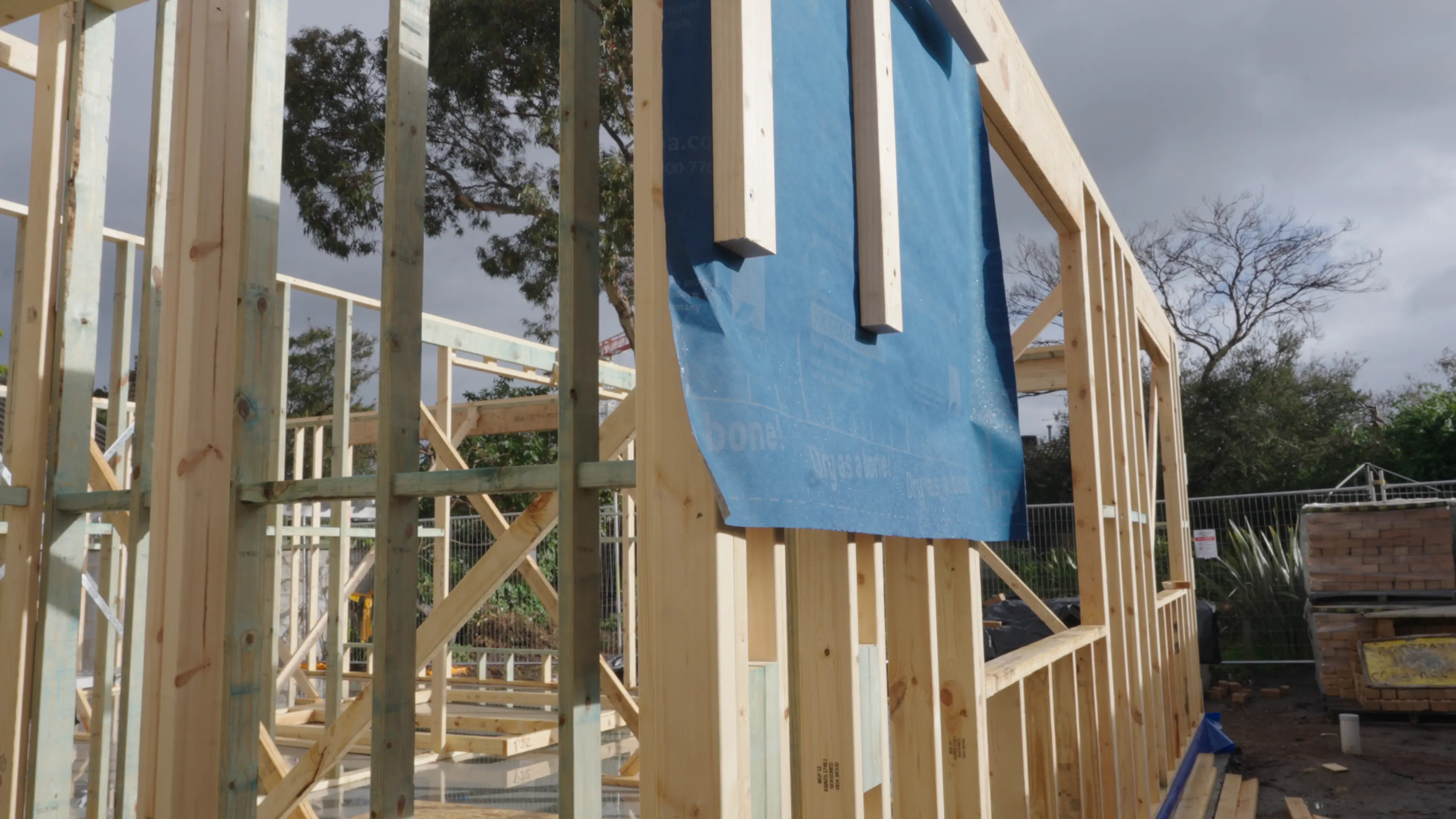
By the time most families reach out to us, they've already asked Google half a dozen versions of the same question. Not because they're indecisive — because a knockdown rebuild is a decision you don't get to make twice, and the research phase is where you earn the right to feel confident about it.
These are the questions we hear most, answered the way we'd answer them in a first conversation — plainly, with real numbers where we can give them, and no rounding up to sound more impressive than the truth.
What should I consider before doing a knockdown rebuild?
Four things, in order. First, whether your land can actually carry the home you're picturing — overlays, easements, soil, and slope all shape what's possible before a single wall is drawn (see our full land-suitability checklist). Second, a realistic all-in budget that includes demolition and site costs, not just the headline build figure. Third, how long you'll need alternative accommodation, and what that costs. Fourth, whether your existing home has anything worth extracting before it comes down — fixtures, materials, sometimes even resale value in the structure itself. Most people start with floor plans. Start with the land and the number instead.
Is a knockdown rebuild cheaper than renovating?
It depends on the house you're starting with — but the honest comparison isn't upfront cost, it's cost per outcome. A major renovation that touches the roof, services, and layout can end up costing close to a rebuild once you factor in working around an existing structure, and you're still not getting a brand-new home with a full builder's warranty. A knockdown rebuild usually costs more upfront, but you're not inheriting anyone else's decisions — old wiring, an awkward layout, a foundation you can't move. If your existing home needs more than a facelift, rebuilding is often the more honest number, even if it isn't the smaller one.
What's the step-by-step process for a knockdown rebuild?
Broadly: a feasibility check on your land, design and a fixed-price contract, planning and building permits, demolition, site works (excavation and footings), construction through frame, lock-up and fit-out, then handover. Council approval timelines are usually the part people underestimate going in — we've written a full breakdown of the approval process that walks through what actually happens at each stage and why it takes as long as it does.
How long does a knockdown rebuild take, start to finish?
From your first conversation to keys in hand, plan for 12 to 24 months once design, council approvals and demolition are accounted for — construction itself typically runs 8 to 12 months. A straightforward block with no overlay issues moves faster. A heritage or bushfire-overlay block adds time at the permit stage, not the build stage — which is exactly why checking your land first (rather than after you've fallen for a design) matters.
Check your own block in under a minute. Our free feasibility tool checks your address against Victoria's official planning data and gives you a plain-language read — overlays, zoning, bushfire flags, and a rough cost band — with the reasons behind every result spelled out. Check your block's feasibility, free →
Do I need council approval to demolish my house?
Yes. Demolition requires its own permit, separate from your building permit, and some councils require a public notice period before it's issued. A heritage overlay can add extra steps on top of that. This should be something your builder coordinates as part of the process — not something you're left to chase up yourself partway through.
Can I stay living nearby during a knockdown rebuild?
Most families rent locally for the build period, so kids can stay at the same school and day-to-day life carries on with as little disruption as possible. Budget for this as a real project cost from the outset, not an afterthought — it's one of the line items that catches people out when it isn't planned for from day one.
"Almost every question on this page comes back to the same fear — locking in a number and watching it move. The answer is always the same: get the land, the demolition, and the alternative accommodation costed properly before you sign anything, not after."
— Tim SwindonWhat's the difference between a knockdown rebuild and a full renovation?
A renovation works with your existing structure — footings, frame, and often the layout stay largely fixed. A knockdown rebuild clears the block and starts from a fresh footing, which means no inherited compromises, a full builder's warranty on the whole home, and the freedom to design the layout around how you actually live, not around walls that happen to already be there.
Still working it out?
If you're at the stage of asking these questions rather than picking tiles, that's exactly the right stage to talk to a builder — not the wrong one. Bring your address, your rough budget, and your questions. We'll give you straight answers, the same way we have here.