The short answer: the change that actually matters for anyone building a home in Victoria this year isn't a technical code detail — it's how you're protected if something goes wrong. From 1 July 2026, Victoria replaces Domestic Building Insurance with a new First-Resort Home Warranty, giving homeowners the right to claim for incomplete, defective or non-compliant work immediately, without waiting for a builder to go insolvent.
We were on site recently as the roof went on for one of our current builds, and it's a good moment to talk about both — the regulatory change that's actually new, and the standard we hold ourselves to on every job regardless of what's mandatory on the day.
The real 2026 change: how you're protected if a builder fails
From 1 July 2026, three things change at once for Victorian home building:
A new regulator. The Victorian Building Authority becomes the Building and Plumbing Commission (BPC), taking over practitioner registration, dispute resolution and warranty insurance administration under one roof.
A first-resort warranty, not a last-resort one. The old Domestic Building Insurance scheme generally required a homeowner to wait until their builder became insolvent, disappeared or died before they could make a claim. The new First-Resort Home Warranty removes that wait — homeowners can claim directly for incomplete, defective or non-compliant work, with cover up to $400,000.
Extended rectification power. The BPC can now order a builder to fix defective work for up to ten years after completion — including work finished before the July 2026 start date.
Why this matters: the old system meant homeowners were often only protected once things had already gone badly wrong — a builder walking away, going under, or disappearing. This one is designed to catch problems while they're still fixable, not just after the worst has happened.
If you were building through 2023, this kind of reform is probably overdue in your mind. The Porter Davis collapse is still the reference point most Melbourne families have for what can go wrong with a builder, and this is a direct regulatory response to exactly that kind of risk.
Meanwhile: here's how we actually build
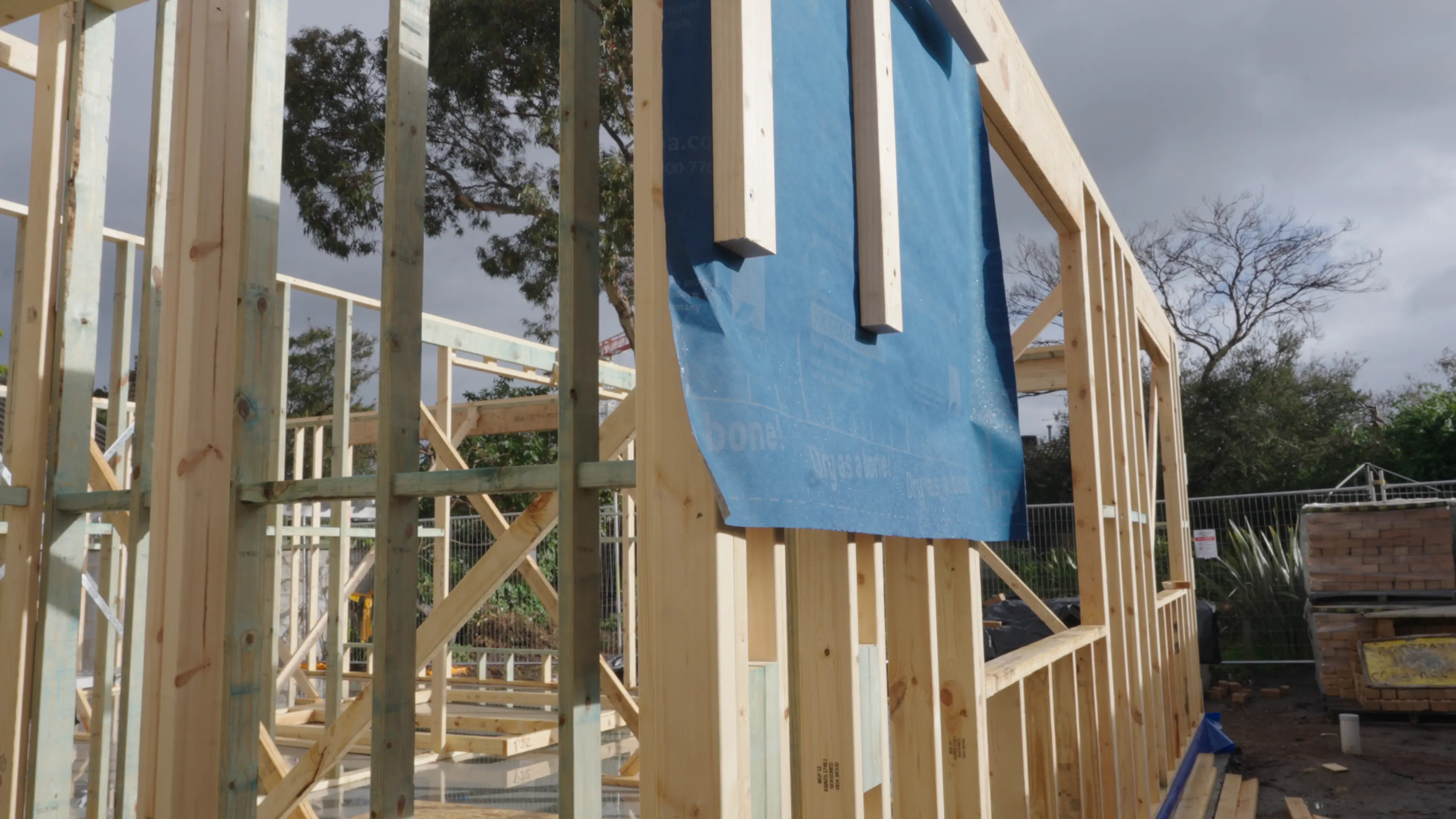
Regulation is one layer of protection. The other is simpler — a builder who builds properly whether or not the paperwork requires it. We had a good example of that on site recently, while the roof was going on for one of our current builds.
New homes in Victoria need to manage airflow through the roof cavity to stop moisture building up and turning into mould — a requirement that's actually been in force since 1 May 2024, under the NCC 2022 condensation management provisions. It's not new for 2026, but it's a detail plenty of builders still aren't applying consistently.
Here's how it works in practice: vents go in along the bottom edge of the roof, where air comes up from underneath and moves through the roof cavity. As that air moves, it dries the space out — which matters, because a sealed, still roof cavity is exactly where condensation collects. On our current build, that air exits through a ridge vent at the top. Bottom vents in, ridge vent out, air kept moving instead of sitting still — which minimises condensation staying on the sarking and reduces the risk of mould over time.
This particular build was designed before the 2024 provisions came in, so strictly we don't have to meet them. We're doing it anyway.
"We're sort of wanting to meet all the new requirements anyway so our owners can live a happy, healthy life in this home."
— Tim SwindonWhile the roof was open, it's worth mentioning a second detail most owners never see. A plaster ceiling normally does double duty — it finishes the room, but it also acts as "nominal bracing," a minor structural brace that helps stop the top of the building moving. On this build we're removing that plaster ceiling detail for a cleaner, laser-level finish, which means we lose the bracing it would have provided. So we've added around 15–18 speed brace crosses through the roof structure to do that job properly instead of relying on a plaster sheet to hold the building together structurally. Small, invisible once the ceiling's up — and exactly the kind of thing that separates a build that's technically compliant from one that's actually built right.
Common questions
What is the First-Resort Home Warranty in Victoria?
It's a new home warranty scheme replacing Domestic Building Insurance (DBI) from 1 July 2026. It lets homeowners claim for incomplete, defective or non-compliant work straight away, without waiting for their builder to go insolvent, with cover up to $400,000.
When does the new home warranty scheme start in Victoria?
From 1 July 2026. The Victorian Building Authority also transitions to the new Building and Plumbing Commission (BPC) at the same time, which takes over practitioner registration, dispute resolution and warranty insurance.
How is this different from the old Domestic Building Insurance?
Under DBI, a homeowner generally had to wait until a builder became insolvent, disappeared or died before they could claim. The First-Resort Home Warranty removes that wait — you can claim for defective or incomplete work directly.
Is roof ventilation a new requirement for 2026?
No — the condensation management provisions requiring roof ventilation came from NCC 2022 and took effect in Victoria on 1 May 2024. It's not new for 2026, but it's still a requirement many builders aren't applying consistently.
What this means if you're planning a build
Regulatory change is a good prompt to ask any builder two questions: how are you protected if something goes wrong, and is your builder doing more than the minimum required on the day your contract was signed? The first is now a stronger system than it used to be. The second still comes down to who you choose.
If you're partway through planning a new build or knockdown rebuild in Bayside or South East Melbourne and want to talk through what either of these means for you, we're happy to walk you through it plainly — no sales pitch, just a straight answer.