Moorabbin
Knockdown Rebuild · City of Kingston · Documented site day by site day, not after the fact
A build you can actually watch happen.
The most common fear we hear from families about building isn't the price — it's the silence. The site goes quiet, the calls stop, and nobody knows what's actually happening behind the fence. So for Moorabbin, we're doing the opposite: documenting the build as it happens, milestone by milestone, including the days that don't go to plan.
Every stage,
as it happens.
Sequencing the Brickwork Around the Plasterboard Delivery
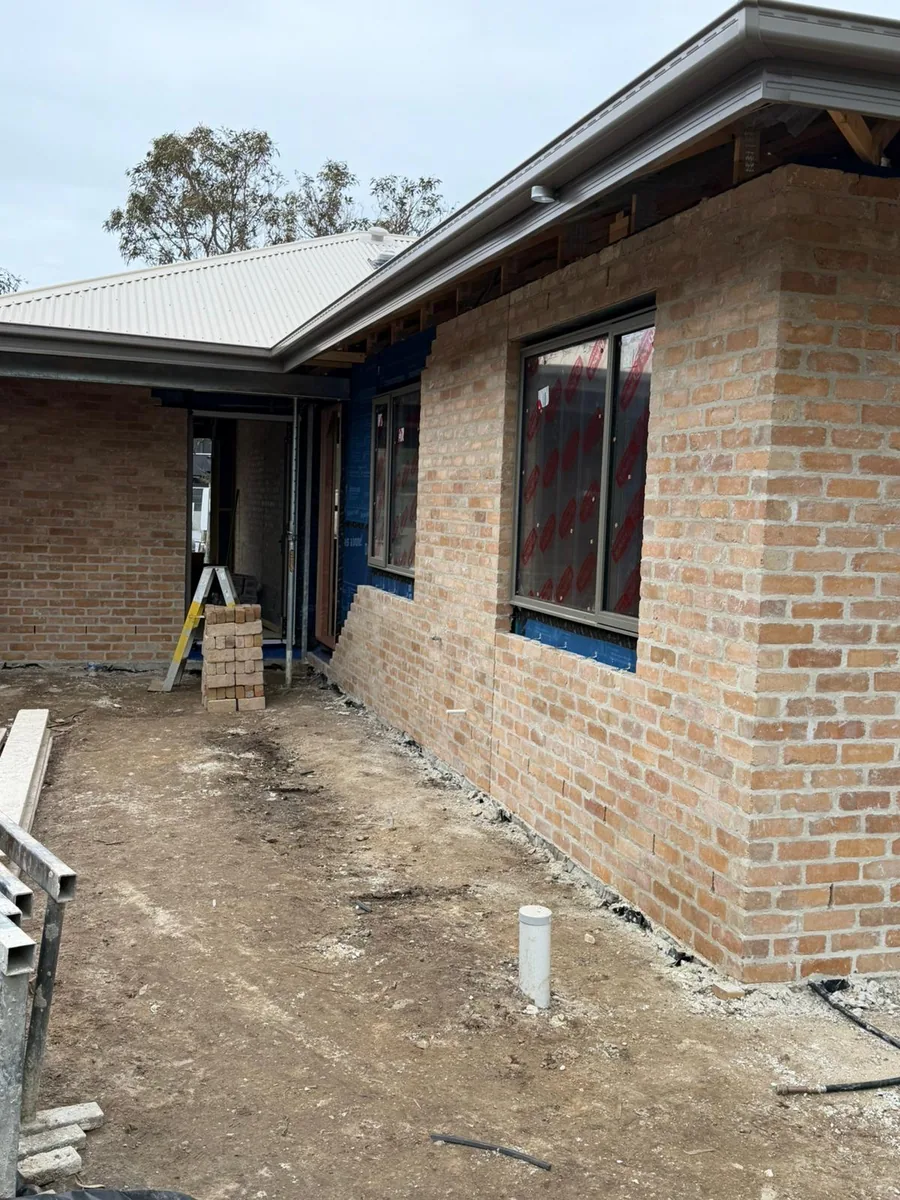
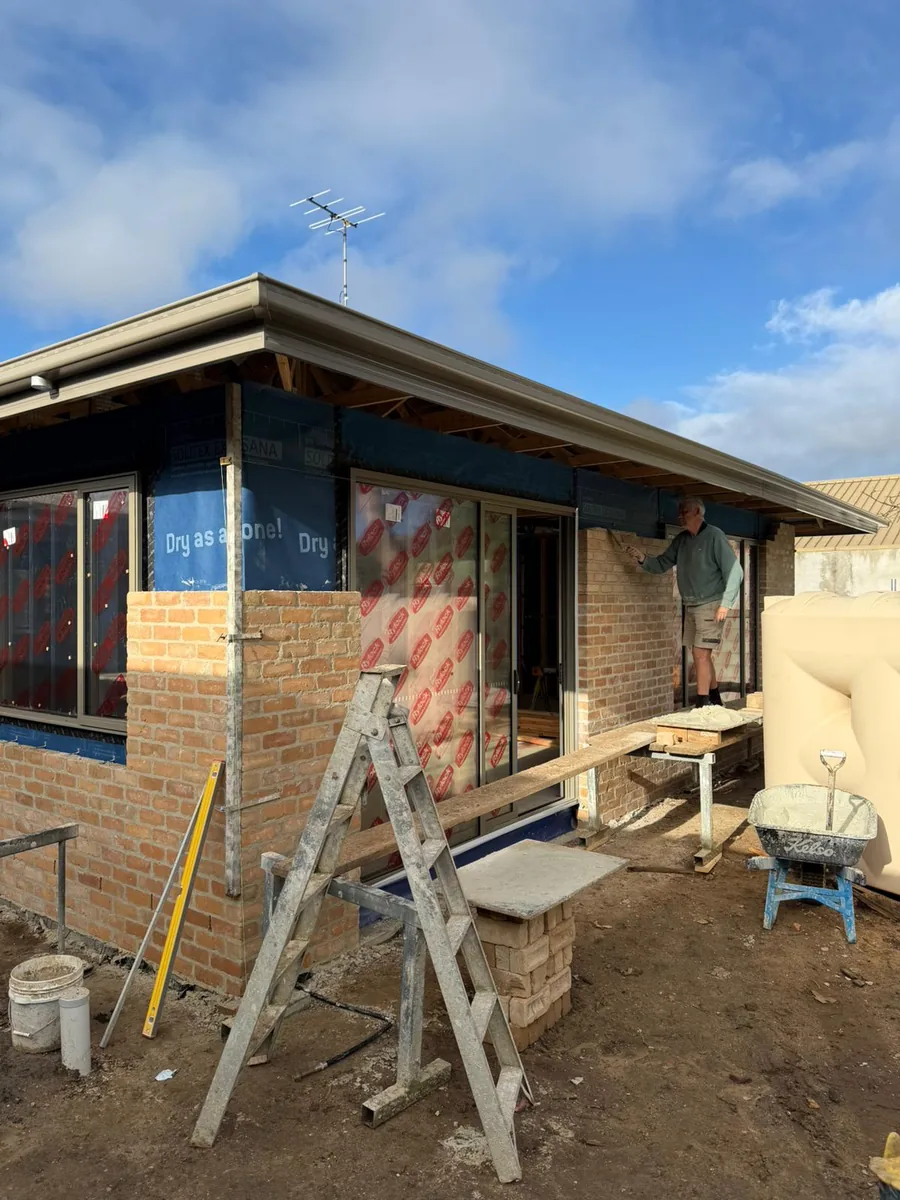
The bricky's started at the back of the house and is working his way around to the front — a brick pier going up, then the front door opening with its side light and frame still to come. The reason he didn't just start at the front is the garden. The owners are keeping the garden the whole way across the front of the block, which means there's no straight line in for the plasterboard delivery. So we've had the bricky start out the back to keep that front space clear, giving us a straight run through — hug the post, come through, hug the corner, and the sheets go straight in. Start the brickwork across the front instead, and every sheet of plaster would've had to be cut in half to get past it. Not the kind of thing you notice from the street, but it's exactly why we sequence trades the way we do.
The glass went in last week, the roof's on with a big eave the whole way around, and the build is fully wrapped — so we're actually able to get the plasterboard in about two weeks earlier than we need to, giving us the clearest possible run for the cartage. Now it's down to the finer details: working out where the truck parks and which side the guys carry the sheets from, so as they walk the boards through, they're leaning and bending the right way to get around that corner. Tight, but we'll be right.
The Bricks Go On
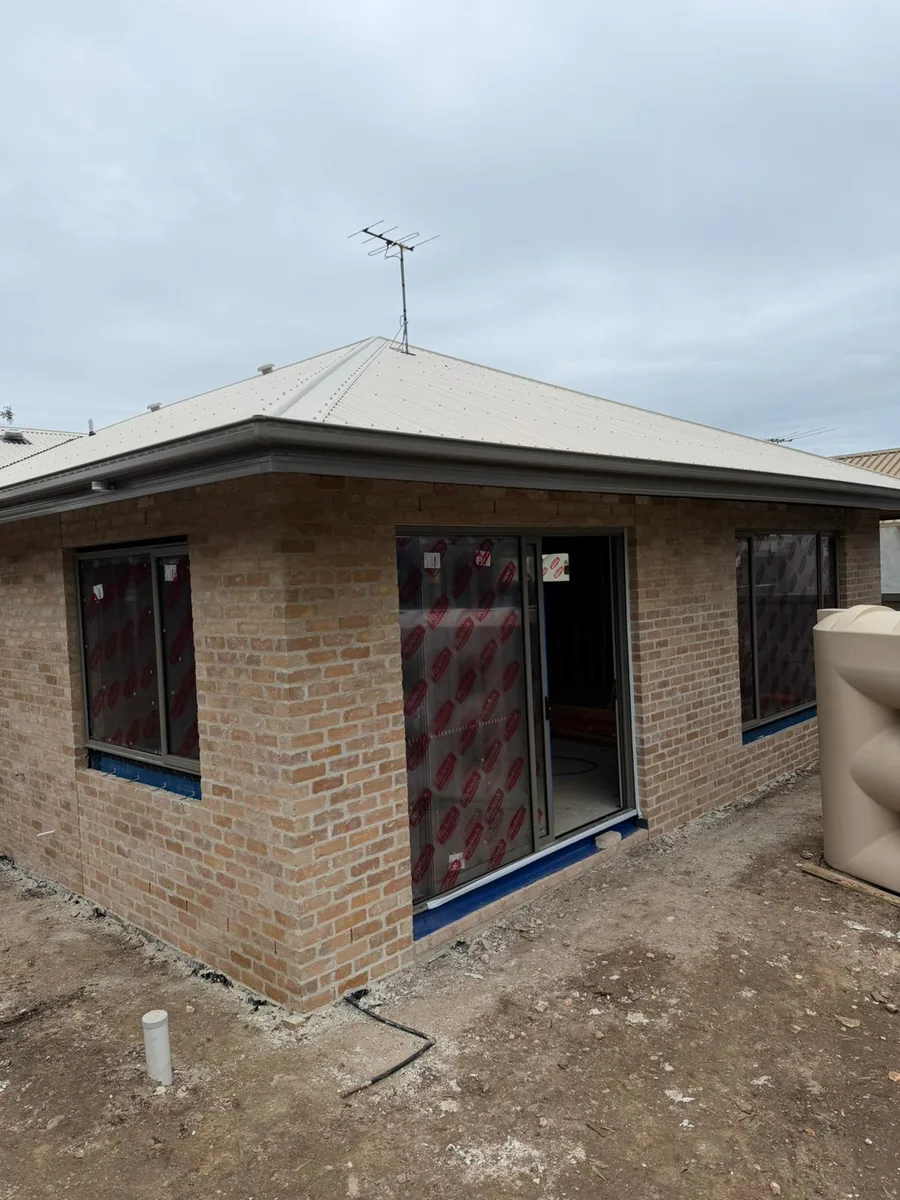
Bricklaying has started, and this is the stage where Moorabbin stops looking like a construction site and starts looking like a house on a street. The brick is a tumbled, recycled-look face brick with a soft lime-toned mortar — chosen to sit with the older homes around it rather than announce itself as the new build on the block. That was a deliberate call by the owners. You can rebuild a house without rebuilding the character of the street.
There’s a detail in these photos worth pointing out, because it’s the part that disappears forever once the brickwork closes in. Behind the bricks is the blue Solitex Extrasana wall wrap, and around every window opening you can see the taped and flashed reveals. That’s the sealing work we talked about at roof stage: get the structure watertight, tape every penetration, dry the frame out properly, and only then close it up. A cavity brick wall works because the cavity stays ventilated and the wrap behind it keeps water out while still letting the frame breathe. Bricks laid over a frame that was never dried out is how you end up with a mould problem you cannot see and cannot reach.
More on why we dry the frame before closing it in: how we stop mould getting into a new build
Tim & Trav Run the To-Do List
Not every update from Moorabbin is a physical milestone — some days the real work happens in a conversation. Here's Tim and Trav walking through what still needs to happen on site, the kind of back-and-forth that goes into keeping a build like this moving between trades. A quick, honest look at the planning side of the job, not just the building side.
Building Past the Minimum: Roof Ventilation
With the roof on, we used the chance to walk through a detail most owners never see. New homes in Victoria need to manage airflow through the roof cavity to stop moisture turning into mould — bottom vents draw air up and out through a ridge vent, keeping the space dry. This build was designed before that requirement applied, so we don't technically have to meet it. We're doing it anyway. While the roof was open we also added extra speed bracing through the structure, to make up for the bracing we lose by leaving the ceiling suspended rather than fixed to plaster — invisible once it's closed in, but the kind of detail that matters for decades, not just for handover.
Read more: what's actually changing in Victorian building law in 2026
The Roof Goes On
After more rain kept pushing the schedule around, we finally had a clear enough run to get the roof on. The team at B & D Roofing were on site to get it done, and with the roof up, Moorabbin has properly turned the corner — the shape of the house is locked in and the build is watertight sooner rather than later. Another stage that looks straightforward from the street and was anything but, given the weather this build has had to work around.
Roofing by B & D Roofing
Protecting a 30-Year Garden
The owners have been on this block for about thirty years, and the garden shows it. They planted the gum at the back themselves. Another tree has only just started fruiting. Scattered through the rest of it are plants they brought in from interstate years ago and nursed back to health — the kind you can’t simply go and buy again. So protecting the garden wasn’t a nice-to-have on this job, it was one of the criteria the design had to meet. The house is being rebuilt in its existing footprint for exactly that reason. We fenced the garden off before anything started, and rather than reversing trucks up the block to unload, we’ve brought cranes in so the materials can be picked and placed from a distance. It costs more and it makes the site harder to work. It also means that when they move back in, they move back into a garden that’s already thirty years old — not a blank block and a roll of new turf.
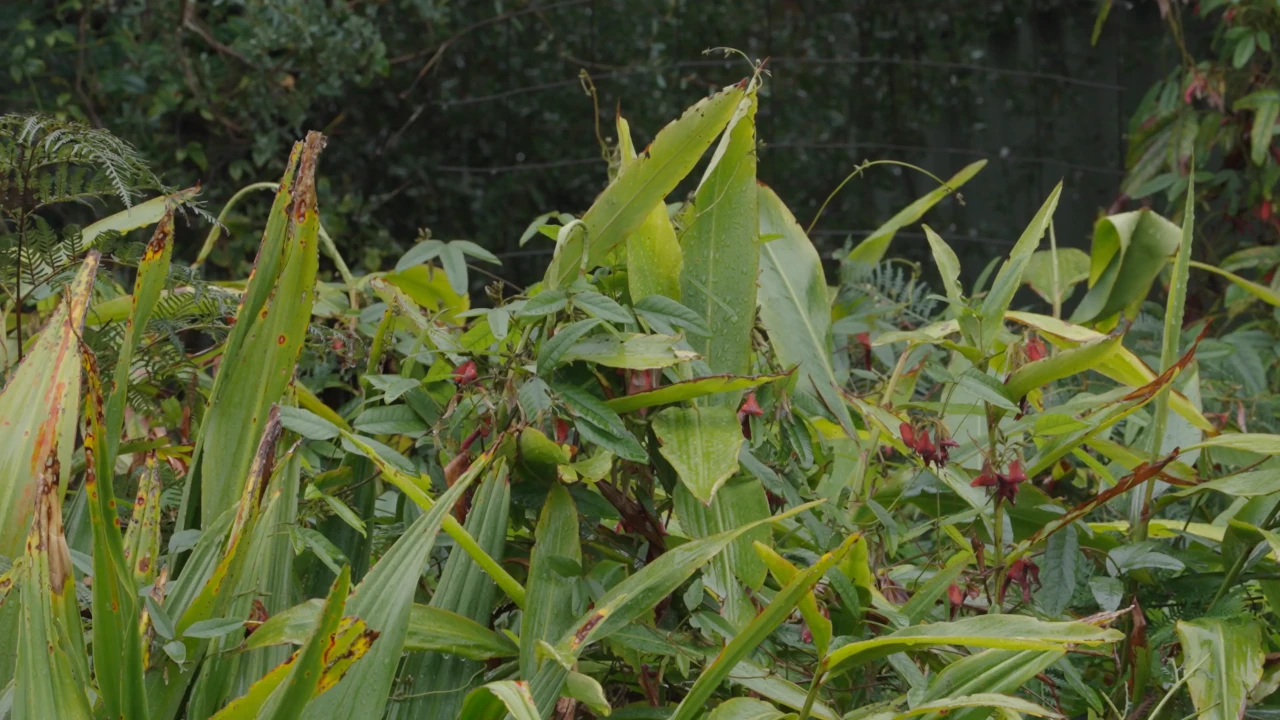
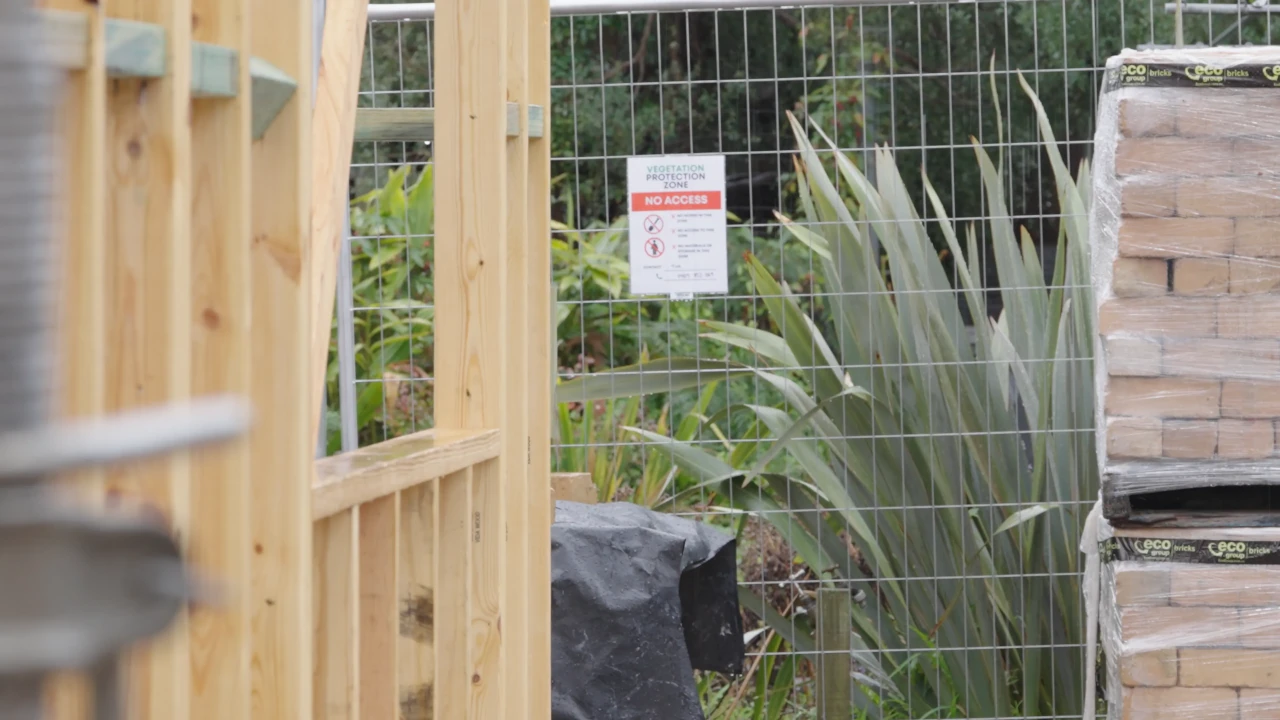
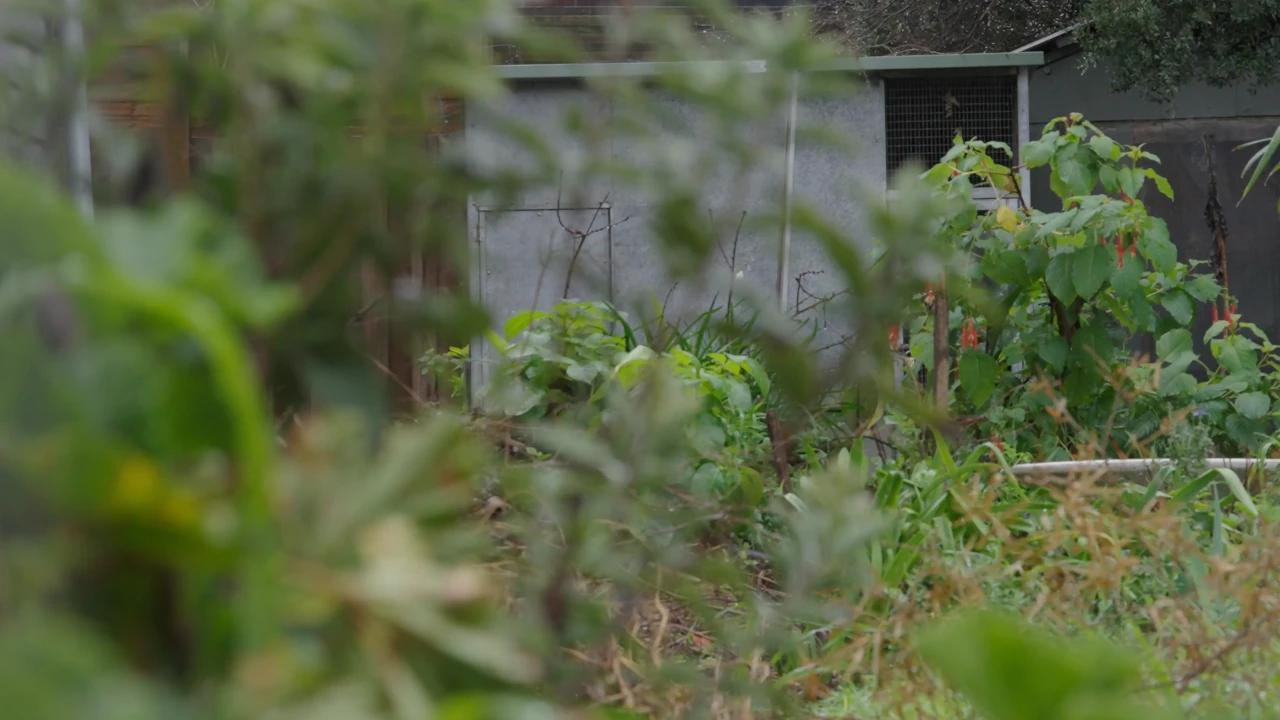
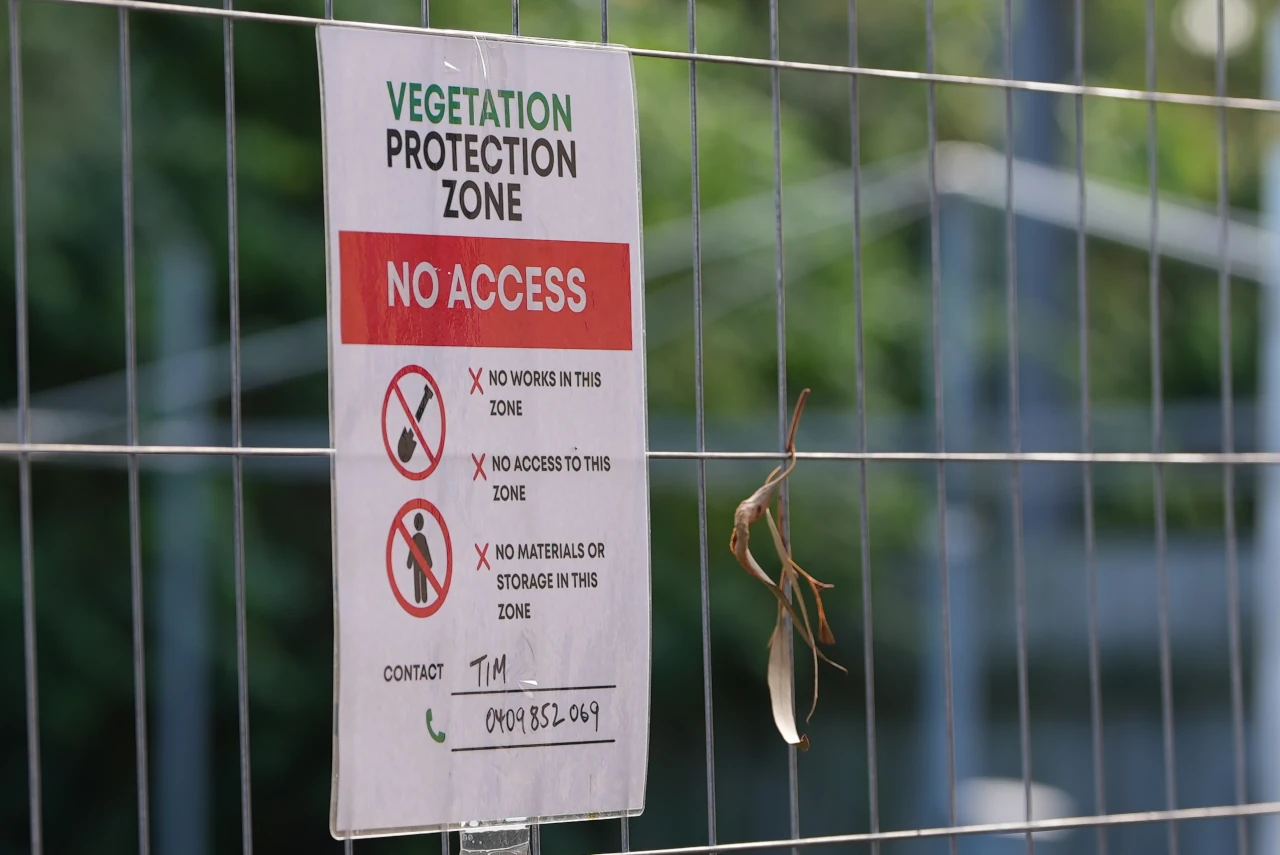
Read more: what’s protected on your block, and what it costs to build around it
The Nature Strip We Damaged — And What We’re Doing About It
Not everything on this page is going to be a win. Our roof trusses are twelve metres wide, and between those and the tree on the verge, the crane had to cut the corner of the neighbour’s nature strip to get onto the block. It chewed it up. There’s no version of this where we pretend that didn’t happen — by the time you notice, it’s already done. So: we’ve smoothed it over, put grass seed down, and it’s actually taking. It will probably happen again with the deliveries still to come. We’ve spoken to the neighbour, who is fairly and reasonably not thrilled about it. The plan is to keep it neat for the rest of the build, then scrape the whole thing back at the end and lay fresh turf, and keep an eye on it until it takes properly.
It’s worth saying why we’d put this on the site at all. When you build on someone’s block, the people either side of it get all the traffic, all the trades, and occasionally the rubbish — and none of the house. They get the raw end of it. Handling that well isn’t a courtesy, it’s part of the job, and it’s something worth asking any builder about before you sign with them.
“They’re getting all the traffic, the trades, the sometimes rubbish… they’re kind of getting the raw end of the bargain. They’re not the ones getting the new house.”
— Tim Swindon, on site
Trusses in the Rain
Not every day on site goes to plan, and we're not going to pretend otherwise. The crane was booked to lift the roof trusses into place this week, and the rain didn't care about the schedule. The team made the call to push ahead — safely, with the right calls made on site about what could and couldn't happen in wet conditions — and the trusses are up. It's the kind of day that doesn't make it into a highlight reel for most builders. Walls are up, the roof shape is now visible, and Moorabbin is starting to look like a house.
Crane work by Roar Cranes
Walls Going Up in the Rain
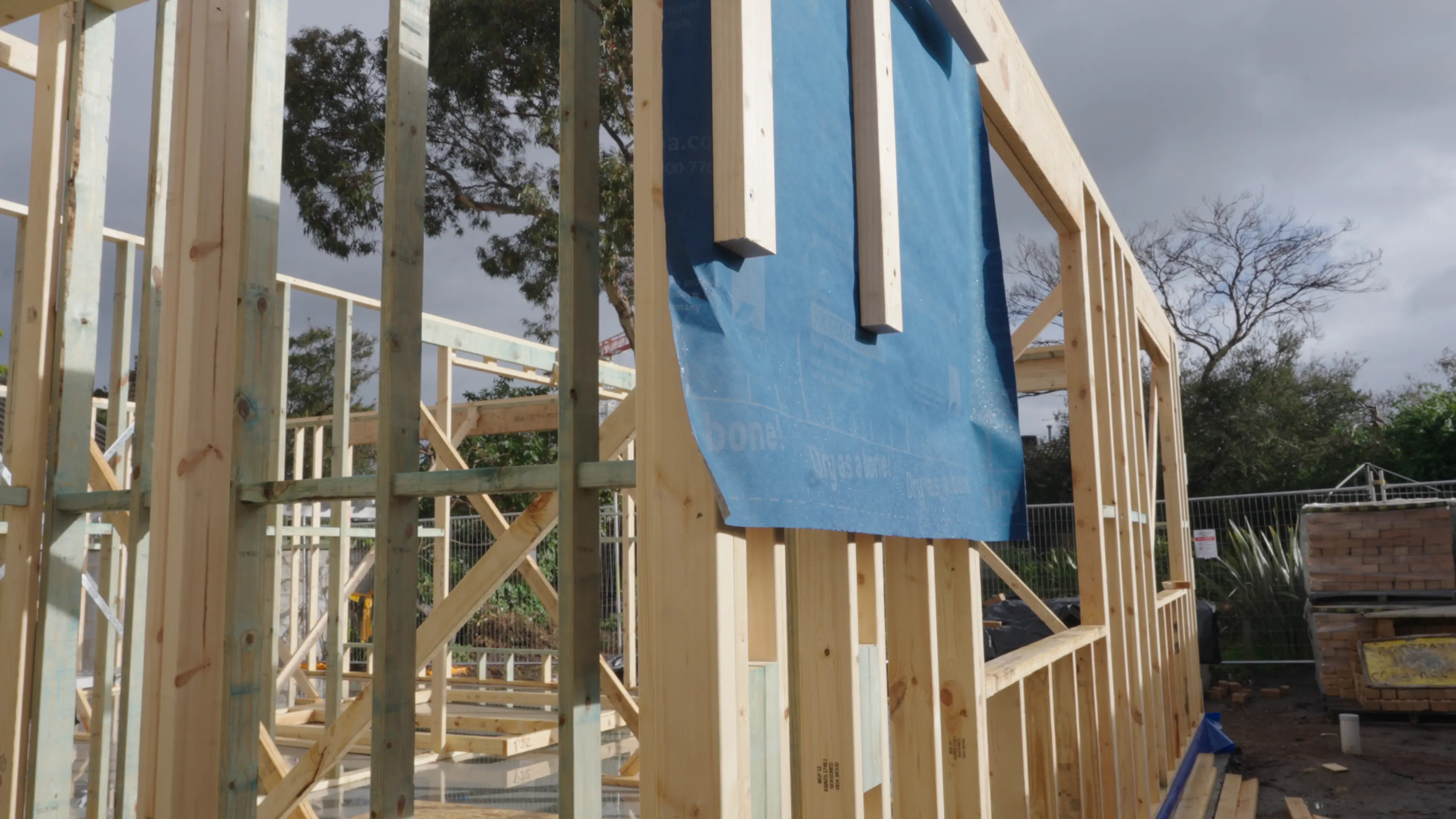
The frame stage doesn't wait for good weather. This is Moorabbin mid-build, walls going up while the rain kept coming — a good reminder that a real build looks like this far more often than the polished handover photos suggest. Progress on wet days is still progress.
Concrete Pour — The Part You Never See Again
The slab went down this week. It's easy to overlook this stage — once the frame goes up, nobody thinks about the concrete underneath it — but it's one of the most important days of the entire build. Get this wrong and everything above it is compromised. Reinforcement, plumbing rough-ins, and services all had to be locked in and checked before the pour, which is why this step takes longer than people expect. Worth the wait.
Concreting by TD Concreting
Demolition — The Reset
Before anything gets built, something has to come down. This week marked the start of the Moorabbin build: demolition of the existing house on site, clearing the block back to a blank canvas. It's not a glamorous stage, but it's an important one — it's the moment a project stops being a plan on paper and starts being something real, even if all that's standing is dust and a skid bin.
Demolition by Dig Dig Demolitions
The trades behind
this build.
More entries added as each shoot day happens on site. Check back — or follow along on Instagram & Facebook.
This is what working with us
actually looks like.
No black box, no silence between site visits — just a real record of the build, published as it happens. If you're weighing up a knockdown rebuild in Moorabbin or across SE Bayside Melbourne, book a free chat with Tim to talk about what's possible on your block.